Itinerary
- Home
- Itinerary
Monday

Seymour Canal
On the sand bottom are white-tipped reef sharks,green turtles,diamond and marble rays,and sea lions.
06H00-12H00
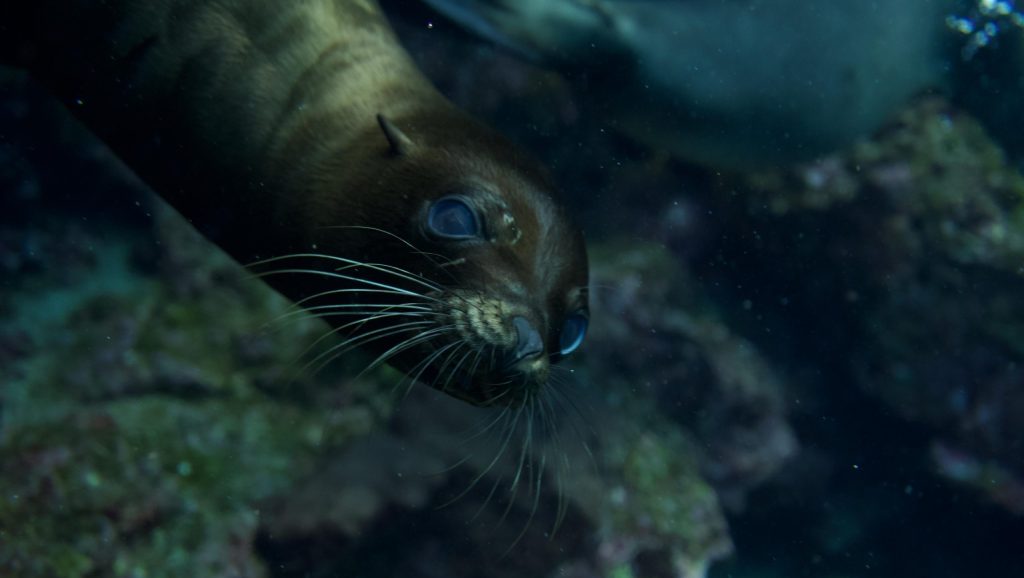
Daphne
Daphne Minor , a tuff cone (giant pile of compressed volcanic ash shaped like a cone),sits off the north coast of santa cruz , west of baltra and north seymour. The dive site is on the west side of the islet.
12H00-17H00
$280
Tuesday

Gordon Rocks
Gordon rocks, one of the best dive sites in the central islands,is on the northeast side of santa cruz, not far from south plaza.
06H00-12H00
Gordon Rocks
Gordon rocks, one of the best dive sites in the central islands,is on the northeast side of santa cruz, not far from south plaza.
12H00-17H00
$280
Wednesday
Seymour Canal
On the sand bottom are white-tipped reef sharks,green turtles,diamond and marble rays,and sea lions.
06H00-12H00

Mosquera
Islote Mosquera, a small, low profile lava islet covered with bleached coral sand, runs north-south in the channel between the northeastern tip of Baltra and the southeastern end of north Seymour.
12H00-17H00
$280
Thursday
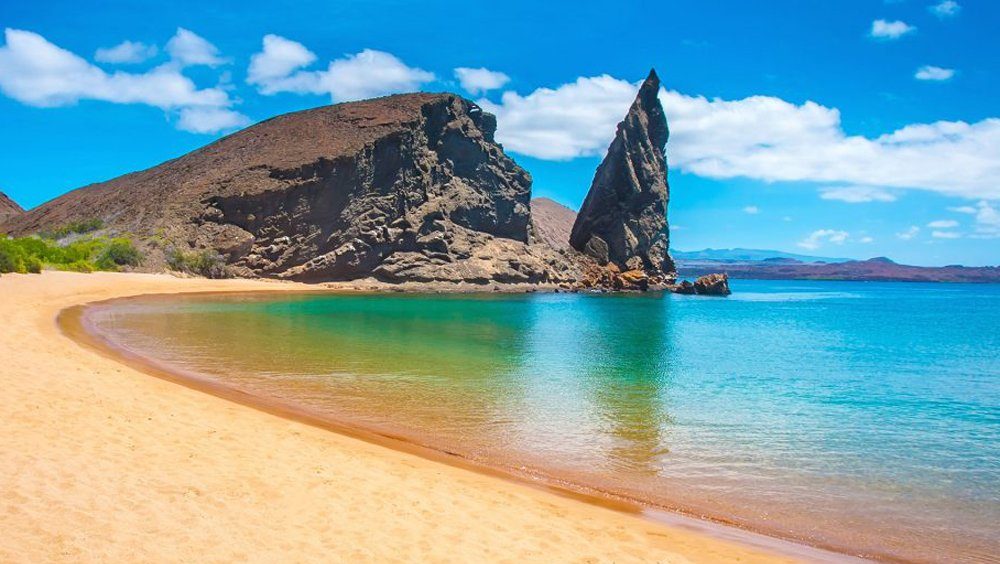
Bartolome
The site at the northheast end of Brtolome is an easy dive that is rarely visited by live- aboards and only occasionally by land- based operatros from Santa Cruz.
06H00-12H00

Cousin
Many live-aboard dive itineraries begin the first full day in the Galapagos with two morning dives at a small, inhospitable-looking islet named Cousins Rock.
12H00-17H00
$280
Friday

Mosquera
Islote mosquera,a small,low profile lava islet covered with bleached coral sand, runs north-south in the channel between the northeastern tip of baltra and the southeastern end of north Seymour.
06H00-12H00
Daphne
Daphne Minor , a tuff cone (giant pile of compressed volcanic ash shaped like a cone),sits off the north coast of santa cruz , west of baltra and north seymour. The dive site is on the west side of the islet.
12H00-17H00
$280
Saturday
Seymour Canal
On the sand bottom are white-tipped reef sharks,green turtles,diamond and marble rays,and sea lions.
06H00-12H00

Seymour Norte
North Seymour is on the northeast corner of Santa Cruz, north of Baltra and Mosquera, and this dive follows its east coast.
12H00-17H00
$280
Sunday

Punta Carrion
Punta Carrion is located behind Santa Cruz Island, between Baltra Island and Santa Cruz is the Itabaca Channel.
06H00-12H00
Gordon Rocks
Gordon rocks, one of the best dive sites in the central islands,is on the northeast side of santa cruz, not far from south plaza.
12H00-17H00
$280

Timeline of the Dive Day
06:00
Our meeting point is at Galápagos Scuba Diving School in Puerto Ayora 🚩
06:15
Departure from Galápagos Scuba Diving School
06:15 - 07:00
Taxi ride to Itabaca Channel
Approx. 45 minutes
07:00 - 07:40
Boat navigation to the dive site
Approx. 40 minutes
07:40 - 08:30
Arrival, briefing, gear preparation and safety check
08:30 - 09:30
First Dive
Approx. 60 minutes underwater
09:30 - 10:30
Surface Interval
One-hour break with hot drinks and snacks
10:30 - 11:20
Second Dive
Approx. 50 minutes underwater
11:20 - 12:00
Lunch Break
Hot lunch on board after the second dive
12:00 - 12:40
Boat navigation back to Itabaca Channel
12:40 - 13:25
Taxi ride back to Puerto Ayora
13:30 - 14:30
Return to Galápagos Scuba Diving School
What’s included in our daily diving tours?
2 Dives per Day
2 x 12L air tanks
Professional bilingual PADI dive guides authorized by the Galápagos National Park
Complete dive gear
Small groups — maximum 5 divers per guide
Hot lunch, snacks, fruits, tea, juice, and drinking water
Towel service
Safe and personalized diving experience
Extra Services
DIN Adapter
$5.00 each*
NITROX Tanks
$15.00 each (must be certified)
15 liters tank with air
$10.00 each
Dive Computer
$15.00 per day*
Private Dive Guide
$210.00
*Depending on availability (Please contact us in advance to check availability for your dive day
Requently asked questions
Diving in the Galapagos is always great, no matter when you come. Most emblematic animals such as hammerhead sharks, Galapagos sharks, sea lions, sea turtles, rays, are here all year round.
In the cold season (June-November) the chances of encountering special animals such as a manta ray or a sunfish on a day dive are better. With a lot of luck a whale shark will swim by. However, the waters are more difficult to dive during the cold season. The warm season (December-May) offers more relaxed diving and better visibility.
Despite its location on the equator, Galapagos has marked seasons due to the influence of different winds and ocean currents. December – May: 70°F/20°C – 80°F/26°C water temperature; the southeast trade winds weaken and the water from the Panama Basin brings warmer and calmer seas; sailing to the dive sites is easier; average visibility is better, around 12m. June – November: 65°F/18°C – 75°F/23°C water temperature; the Humboldt Current typically brings choppy seas and strong surges making sailing times longer; the average visibility drops to about 7m.
An Open Water certification (PADI, SSI, NAUI, BASC, …) is sufficient to participate in our daily diving tours. For the dive site Gordon Rocks we require an additional 25 dives of experience. Some experience in cool and current-rich waters is an advantage (but not mandatory) since water temperatures here are quite low and all dives are drift dives. Divers without Open Water certification can do a Discovery Dive with private guidance at all dive sites except Gordon Rocks.
Yes. If you do not have a diving certification (such as PADI Open Water), you can still join our daily diving tours by participating in a Discover Scuba Diving experience. This introductory dive allows you to safely experience breathing underwater under the close supervision of a professional instructor.
Through this experience, you can dive at some of the iconic diving sites of the Galápagos and discover its extraordinary marine life, even without a certification.
Yes, if you have at least 18 dives experience, you can have your diving skills evaluated for Gordon Rocks by our guides on a previous dive.
No payment is required when booking online through our website. We will send you a payment link once we confirm the availability of a diving spot for your chosen date.
We recommend booking day tours at least 2 days in advance, as availability may be severely limited a few days or weeks before the planned trip. Boats for day diving tours in the archipelago have a maximum capacity of 12 guests. If you intend to come during the high season (Easter, July/August, Christmas/New Year) or as a group it makes sense to contact us up to 1 year in advance, otherwise 6-3 months is sufficient to find flexible availability.
Yes, you can cancel before any payment is made. If you pay and then you wish to cancel, then the cancellation policy applies.
On each day diving tour, the last dive ends around 01:00 PM. PADI recommends 18 hours between diving and flying. As the first flights depart quite late in the morning, it is usually no problem to fly the day after diving. Night dives are not possible the day before a flight.
Yes, we give a discount of USD 20/ day diving tour for bringing complete private equipment (wetsuit, BCD, regulator, mask, and fins (boodies)). Please note that our tanks have YOKE connections; if you have a DIN regulator, you should also bring an adapter. The use of reef hooks is prohibited at all dive sites.
No, photos are not necessarily included. We want our guides to be able to concentrate fully on safe and good diving without the pressure of documenting the dive. However, the guides have private cameras which they are free to use as they think fit. Whether the photos are made available for free afterwards or can be purchased for a few extra dollars is also at the discretion of the respective dive guide. We allow our guests to take their own small camera on the tour. However, they must stay with the dive guide and follow the pace of the group. Guests who wish to concentrate on photography and may bring their (professional) camera equipment will require a private dive guide.
Our groups have a maximum of 5 divers/guide. Every day, we try to divide the groups as much as possible into more experienced divers and less experienced divers. However, depending on the participants, it is difficult to do this very strictly, i.e., there can be quite a difference in diving experience within the group. If you, for example, have a lot of experience (200+ dives) and want to ensure an uninterrupted dive, there is the option of hiring a private guide. Likewise, if you are a beginner who is not confident enough in his/her diving skills, a private guide or an assistant can be hired.
Yes, you can book private guidance. We differentiate between an assistant/divemaster who helps you with diving in the group (for example, in case of difficulties with pressure equalization or buoyancy control) and a private dive guide/instructor who helps you if necessary, but above all with whom you can dive independently of the group. An assistant costs USD 180/ day diving tour, and a private guide costs USD 210/ day diving tour.
There are basically two possibilities: One is to add a couple of day diving tours before or after the cruise, which in most cases is the easier and more affordable option. The other is to include a diving day during the cruise, which means we pick you up from the cruise ship and drop you off there after diving. Whether and how this is possible depends on various factors, especially the itinerary of the cruise. This boat-to-boat option is almost exclusively possible as a charter booking.
No, these dive sites are too far away from any inhabited island to be reached on a day diving tour. Darwin and Wolf can only be visited on an 8-day / 7-night dive liveaboard cruise.
There are no day diving tours from Santa Cruz to Isabela Island. It is possible to dive from Puerto Villamil/ Isabela Island, but we cannot recommend it and do not sell it.
Our team is happy to receive recognition for their work, of course. We recommend between 5-20 USD/tour as a tip. The money in the box is shared by all crew members. If you would like to thank a specific person, please put the money directly in their hand. However, it should be noted that no one has to live off the tips.
Book your adventure
Explore the underwater wonders of the Galapagos Islands with our diving experts. Live a unique experience that combines safety, excitement and the impressive marine environment.
Phone
+593 96 759 5993
Location
Juan Leon Mera #693 e Isla Duncan
galapagosdivingschool@gmail.com
Opening Hours
Mon – Sun : 8:00 am – 17:00 pm

We are Galapagos Scuba Diving School S.A.S., experts in offering safe and memorable diving experiences in the Galapagos Islands, with a team of certified and passionate instructors.
Quicklinks
Copyright © 2026